‘The Ascent’ review: Mandy Horvath’s remarkable journey
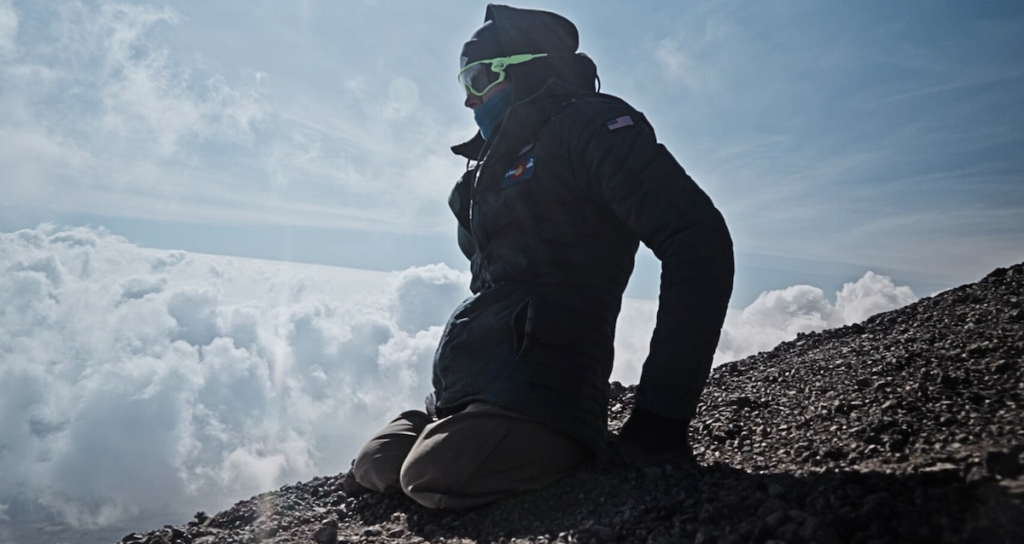
"The Ascent" follows Colorado climber Mandy Horvath up Kilimanjaro and into the mystery of how she lost her legs.
Climbing documentaries are practically a dime a dozen these days, but I can guarantee you’ve never seen anything quite like “The Ascent.”
At its center is Colorado Springs climber Mandy Horvath, who lost both legs after being struck by a train in 2014. Seven years later, she set out to crawl to the summit of Mount Kilimanjaro, Africa’s tallest mountain, using only her hands.
Directors Edward Drake, Scott Veltri and Francis Cronin bring us close enough to watch Horvath agonizingly push herself over rocks, roots, snow and other unforgiving terrain. As she hauls herself upward inch by inch, you can practically feel your own hands aching.
The 103-minute documentary, which screened at the 2026 Denver Film Festival after winning the 2026 SXSW Documentary Feature Audience Award, cuts between that grueling expedition and an investigation into how Horvath ended up on the tracks. It’s a hell of a combination, and the filmmakers make both stories so compelling that I was riveted right through the final shot.
Horvath remembers little of that night. She had been drinking and suspects someone drugged her. Interviews with people connected to the incident raise disturbing questions about the police response, which initially treated the case as a suicide attempt. The filmmakers uncover troubling gaps but no definitive answers. Simple, rough-edged animation effectively evokes the fragmented memories and trauma that haunt her.
The violence in Horvath’s life began long before the accident. She recounts hiding her younger brother while their father abused their mother. When she finally confronted her father, he slapped her and kicked her down the stairs with steel-toed boots. Rather than stay down, we hear Horvath describe how she got back up and punched him in the jaw before fleeing.
Already struggling with alcohol before the accident, Horvath fell deeper into addiction afterward. Her climbs of the Manitou Incline and Pikes Peak attracted national attention in 2018, even as she was arrested three times in six months on suspicion of DUI, with the last arrest also bringing a second-degree assault charge. The filmmakers don’t airbrush this history, and the back-and-forth editing between the climb and her life story gives Horvath’s extraordinary perseverance a complicated, human context.
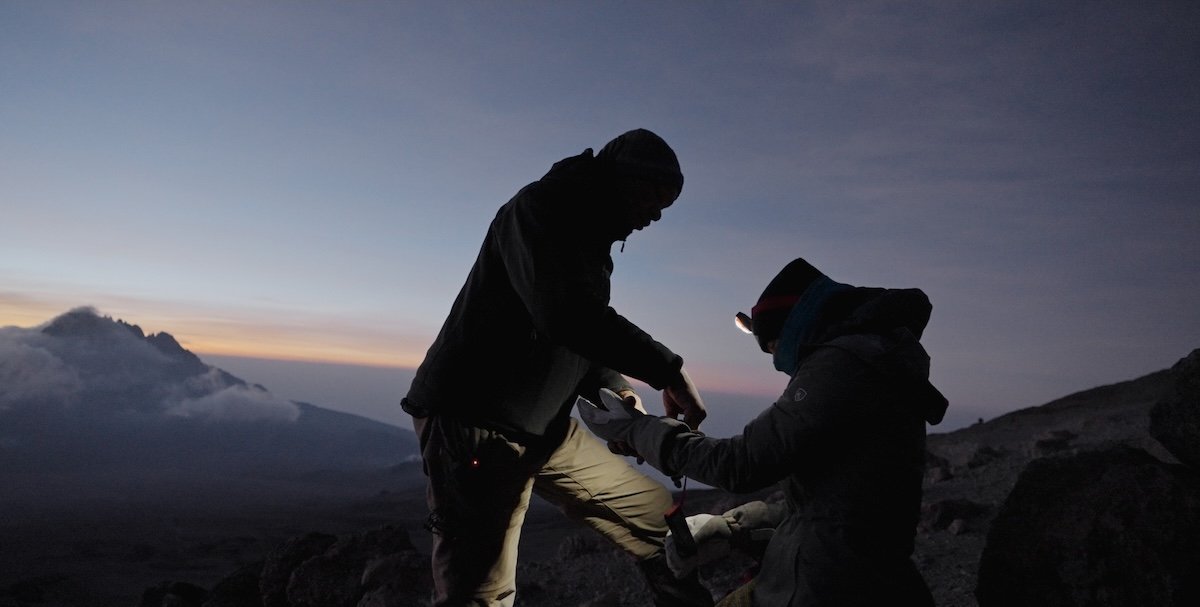
A still from “The Ascent.”
This could easily become a relentlessly grim film. Fortunately, Horvath is also hilarious. On a flight to Africa, she jokes about finally having enough legroom. Later, crawling backward, she hits a rock in an especially unfortunate spot and is back to cracking jokes within minutes. Her irreverence keeps the film from slipping into the usual inspirational clichés.
The stories converge in her relationship with Tanzanian guide Julius John White, known as Whitey. When he carries her across terrain she cannot negotiate herself, accepting his help becomes its own challenge. After years of abuse, uncertainty and betrayal, trusting another person doesn’t come easily.
“It’s a choice to heal, and it’s a choice to change the pain that I’ve endured into something beautiful,” Horvath says. Watching her make that choice, bruised and vulnerable but willing to lean on others, is the film’s greatest achievement.
It’s been a terrific year for documentaries, and “The Ascent” ranks among the best I’ve seen. Here’s hoping it finds the wider audience it deserves.