From rock bottom to pilot pitch: Kaily Morgan Smith on her short film ‘General Admission’
The Series Fest co-founder and Colorado native talks about turning the final scene of a TV pilot into a festival-circuit short, shooting a 7-minute monologue in a circle of folding chairs, and finding the series a home.
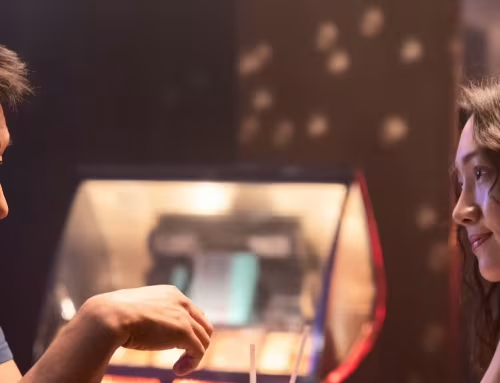
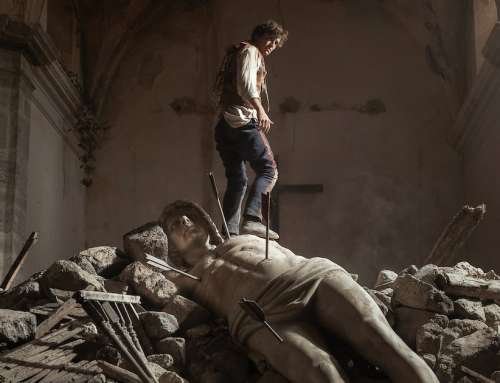
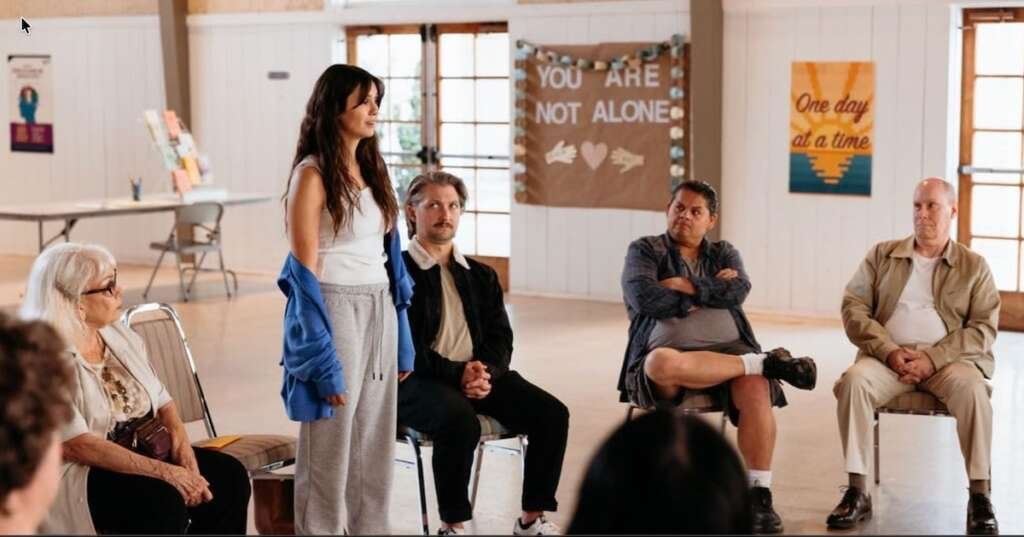
General Admission is a 10-minute short built around one woman, one very confused support group and a confession spiral that gets very specific, very fast. Directed by Kaily Morgan Smith and written by Sarah Adina, it stars Nina Dobrev and has played Tribeca, the Hamptons and Denver film festivals.
What looks like a standalone comedy is really a calling card: The film is the closing scene of a pilot called Just Leave Him, and its festival run is part of the pitch. Smith, who was born in Fort Collins, raised in Denver, and co-founded Series Fest, joined me to talk about the shoot, the casting, and where the series stands now.
Q&A
Did you film this in Colorado? I know you have a Colorado connection.
No, we filmed in Los Angeles. But yes, I was born in Fort Collins and raised in Denver. I left at 18 for USC, spent 25 years in LA, and recently moved to Miami.
The story has a “oh my god, this happened to me” ring to it. Did it happen to you or someone you know?
It happened to the writer, Sarah Adina. She calls it the rock-bottom moment of her life, and everything in it is true, from her knocking over the chair at the beginning to the “Castaway” confession.
It’s built on one big turn, around the eight-minute mark. How did you figure out where it would land?
The short is actually a scene from a pilot Sarah wrote, and the series is called Just Leave Him. It’s about a woman trying to get out of a toxic relationship, which we’ve all been in at some point. This is the final scene of the pilot. We pulled it out to make a short, partly as a proof of concept, but the structure, the pacing, and the turn were already in the show.
How did you land Nina Dobrev to play the main character, Kelley?
Very luckily. Sarah is best friends with Nina, and they had another project they were writing, which I came in to direct. I became best friends with Nina too. When Sarah and I decided to do this, we asked whether she’d ever do a short, and she said yes.
What are you hoping a short like this does at festivals?
The original intention was to enjoy making something with friends and put something into the world we believed in. The second piece is the proof of concept. Premiering at Tribeca, then playing the Hamptons and Denver, shows us how people respond to the tone, the story and the writing, and it gets people aware of the project. We’ll have done seven or eight festivals by the end of this year, and the response and reviews help when we’re pitching the show.
The ending is chef’s kiss. The little reaction to the guy and the music kicking in made me want more.
Good! That’s exactly what we wanted.
Where is the series now?
We just started pitching to streamers and networks. Nina is attached to star and executive produce, the pilot is written, and now it’s about finding a home for it.
Tell me about the shoot. It’s a dozen or so people in a room, with that rotating camera. Was it one day?
Two. It’s a 7-minute monologue, and I wanted to give Nina time to settle in and give the performance I knew she could, plus time to get reaction shots. I used two cameras. Because everyone sits in a circle in one room, it was actually more complicated than it sounds. We ran it like a play. I started with the wide and ran the first half twice, then the second half twice. Then, going in closer, I’d have one camera on Nina and one on someone giving a reaction. It was like a jigsaw puzzle.
Everyone in the circle feels cast, not like extras. How did that process work?
I was adamant that I didn’t want extras showing up the day of. Extras distract me when I’m watching TV. Our casting director, Anthony Krause, sent headshots, and a few people sent self-tapes, but mostly I created characters in my head for the non-speaking members. I wanted an older woman who’d be the slots lady. Her line, “what about slots, they’re fun and bad,” was added on the day. She wasn’t supposed to speak, but based on her reactions Sarah threw out the line, and it’s one of my favorite moments in the short.
For the speaking roles, we cast Nina first. Then I kept a bulletin board with all the options for Daryl, Eddie and Ruth, arranged in a circle, and kept swapping people in and out depending on schedules. Adam Shapiro, who plays Daryl, was on the board for weeks. Sarah and I ran into him at the Hollywood Bowl right after talking about him, and the next day I ran into him again on a random street in the Valley. I told him, “You’ve been sitting on my bulletin board for weeks, I need you to read this script.” He said yes.
For Eddie, Sarah is friends with Cedric Yarbrough, so we went through his agents and manager with a formal offer, and Sarah gave him a heads-up. Sarah Baker I knew from her TV work, so we just put out an offer. Cedric and Sarah happened to know each other, and they didn’t realize they’d both been cast until they showed up on set and were like, oh my god. The camaraderie was great.
What’s next for you as a filmmaker?
There’s the feature Sarah and Nina wrote, a romantic comedy called Mismatch. Like usual in the indie world, we had the funding, then it got delayed, and I don’t know exactly where it stands, so we have to pick the ball back up. Sarah and I also have two other projects in development, with her writing and me directing. And I’m directing some television and moving further into that world.
You’re a co-founder of Series Fest. Are you still involved?
I’m always there. I’m on the board, and Randy, our CEO and my co-founder, and I talk every couple of days if not every day. I’m just not running it day to day. I’m very proud of what we’ve built: the education programs, the women directing mentorship with Shondaland, and a new writing lab we’re running this week at Denver Film. It’s exciting to see how the organization has grown.
SeriesFest returns to Denver April 23-27, 2027.