Sagan doc is a stellar, human portrait of science’s greatest showman
Thirty years after his death, a new film shows how one scientist made the universe personal, and why his warnings about misinformation still land.
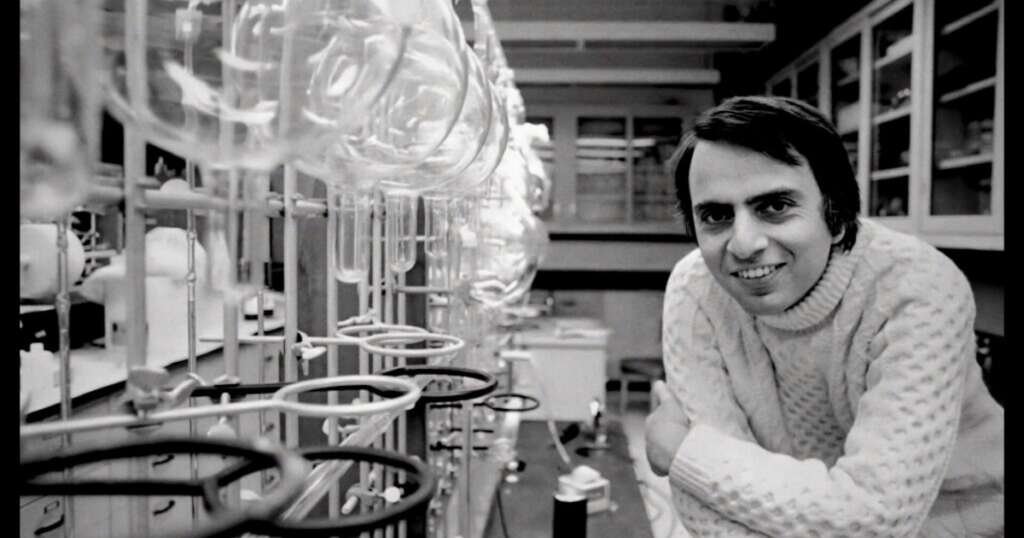
It’s been 30 years since astronomer Carl Sagan died of cancer at age 62. In that relatively short life, he transformed what it meant to be a scientist with a message to spread. By the 1970s, he was making regular appearances on television and other media, explaining heady concepts of astronomy, cosmology and planetary science to a lay audience. With a keen interest in the possibility of extraterrestrial life, he led the effort to add a media disc, the Golden Record, to the Voyager spacecraft in the hope that one day it would be discovered and understood.
It’s hard to impress upon a younger generation how omnipresent Sagan was in the ’70s and ’80s. In addition to regular appearances on “The Tonight Show” to joke around with Johnny Carson, he co-created and starred in the wildly popular 1980 series “Cosmos” and book followup. That meteoric rise to fame, and his untimely death, are captured in a moving new documentary, “Carl Sagan: We Are Made of Star Stuff,” which screened at the Denver Film Festival Oct. 27.
Produced by Sagan’s widow, Ann Druyan, along with Seth MacFarlane, director Nanette Burstein and others, the documentary follows a standard chronological format with the typical mix of archival footage and new interviews. What sets it apart is the extraordinary amount of footage of Sagan, along with Burstein and editor Tal Ben-David’s well-constructed story arc.
“Carl Sagan” gives us an inside look at the man behind the screen, his early days and how he became both a fixture of the astronomical community and a pariah within it. Jealousy, the filmmakers suggest, drove much of the criticism Sagan received from his peers, while the public at large embraced him as the most likable science teacher they’d ever met.
The messy side
While his mind may have been engaged in thoughts on a literally astronomical scale, Sagan the man is also explored at length. Druyan, who started as Sagan’s work partner and later became his third wife following a messy divorce from his second, Linda Salzman, sits for extended interviews describing their relationship. In her telling, she and Sagan had never even kissed when they realized they were in love and needed to be together.
That meant Druyan leaving her partner, writer Timothy Ferris, and Sagan leaving his wife. Salzman, who died in 2023, gets little representation for her side of the story, but she was far from happy about it and held up the union for years.
Druyan is a lively subject, endlessly enthusiastic about the love she shares with Sagan, their work together and his place in history. One of the funnier sections comes when she describes how the “Cosmos” team spent much of its time very stoned on high-powered Thai stick cannabis.
Another strong element comes from Sagan’s involvement with the Voyager project, particularly the Golden Record he worked on with Druyan, Ferris and others. A last-minute idea from NASA enabled them to assemble a mix of content ranging from samples of dozens of Earth languages to music from Bach to Chuck Berry to information about sex and reproduction. It made the conservative NASA scientists a little worried, but the looming deadline got them to sign off.
Although Sagan wasn’t an operations leader on the mission, as a member of the imaging team he convinced them to turn Voyager 1’s camera back toward Earth for one last look as the spacecraft neared the edge of the solar system. The resulting “Pale Blue Dot” photograph became an emblematic image of our “speck of dust” in the universe, and striking images of the spacecraft heading off into the black vastness of space are later shown in parallel with Sagan’s own demise.
Along with that archival footage, the film also makes great use of modern-day graphics to illustrate many of the scientific concepts.
A powerful piece of documentary filmmaking, “Carl Sagan” also serves as a vivid reminder of how one person can make a difference. Sagan had prescient observations about the role of knowledge and how it can be distorted for political gain. Today’s climate of “fake news,” rampant conspiracy theories and scientific know-nothingism wouldn’t surprise Sagan, but at least he headed off into the cosmos knowing he’d done all he could to prevent it.