‘Watch You Rise’ review: An intimate story buried in big ideas

Boulder filmmaker Isabella Grace Cohn's 'Watch You Rise' has moving moments, but its sprawling approach undermines the story.
Early in “Watch You Rise,” Boulder filmmaker Isabella Grace Cohn spreads childhood photographs of her mother across the floor. She’s looking at someone familiar, but what she sees has changed.
“I couldn’t stop looking at photos of my mom,” Cohn says. After learning that her mother was sexually abused by a family member beginning in third grade, the photos of her from that time carry a new weight. Cohn wonders what might have been different if her mother had been believed and helped. It’s a question that gives the film its emotional stakes, even as its attention drifts elsewhere.
Cohn’s first feature begins with her teenage curiosity about the #MeToo movement and the realization that her mother was among its many unacknowledged survivors. She starts interviewing young people about sexual violence, trying to understand why it happens and what might prevent it. During college, she recognizes that she, too, was assaulted while intoxicated by someone she trusted.
The parallel between their experiences gives the documentary, making its world premiere at the 2026 Denver Film Festival, a weighty personal throughline. Unfortunately, Cohn pursues so many related questions that she struggles to develop any one of them fully.
A message in search of a movie
The young people who sit for Cohn’s camera offer painful, sometimes startling insights. Maya describes blaming herself for an assault. Quinn discusses how narrow stereotypes about victims obscured her experience as a Black trans woman. A teenager admits, “I don’t really know what consent is just yet.”
Any one of these stories could anchor a richer exploration. Instead, the film hops from inadequate sex education to pornography, colonialism, racial inequities, Title IX investigations and restorative justice. Experts such as #MeToo founder Tarana Burke and psychologist Annie Farmer offer useful context, but the accumulation of talking heads starts to feel like a very earnest college syllabus.
Cohn tries to liven things up with psychedelic animation, protest footage and onscreen declarations. We even watch her Google various questions as she researches them. Showing us the documentary being made is an interesting choice, but the relentless search for answers sometimes feels too much like scrolling through someone’s browser history than watching a documentary finds its shape.

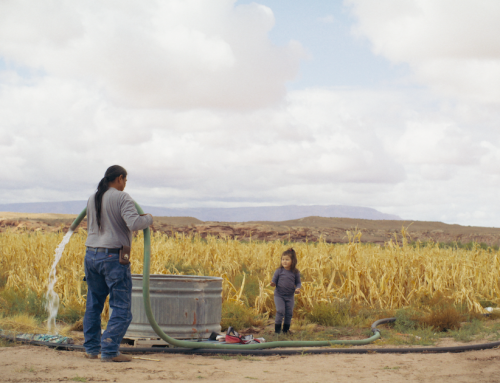
A still from “Watch You Rise” by Boulder-based filmmaker Isabella Grace Cohn.
The film becomes considerably more compelling when Cohn turns to her own experience. She contacts the person who assaulted her and records their conversation. Later, she and her mother disagree about restorative justice: Cohn wants survivors to have choices beyond punishment, while her mother worries about perpetrators who aren’t genuinely remorseful.
Neither woman has an easy answer, and the film is stronger for leaving that tension unresolved. There is real courage in Cohn’s willingness to share these conversations, and her affection for her mother gives the documentary its emotional pulse. Yet their relationship is repeatedly sidelined in favor of testimony that receives too little time to develop.
“Watch You Rise” raises urgent questions about how sexual harm happens and what healing can look like. Cohn’s relationship with her mother provides exactly the kind of specific story that could bring those questions into focus. I wish she’d trusted it to carry more of the film.