‘The River’ review: Getting real about water scarcity
Mara Tasker's stunning documentary brings the Colorado River crisis to life through the people fighting for its future.
What happens when millions of Americans depend on a river that can no longer meet their demands?
Mara Gasbarro Tasker‘s extraordinary documentary “The River” approaches that question from nearly every angle imaginable, traveling across the American Southwest to meet the farmers, ranchers, Indigenous communities and suburban residents whose futures depend on the Colorado River.
Urgent, beautifully photographed and deeply compassionate, “The River” transforms an enormously complicated environmental crisis into something frighteningly personal.
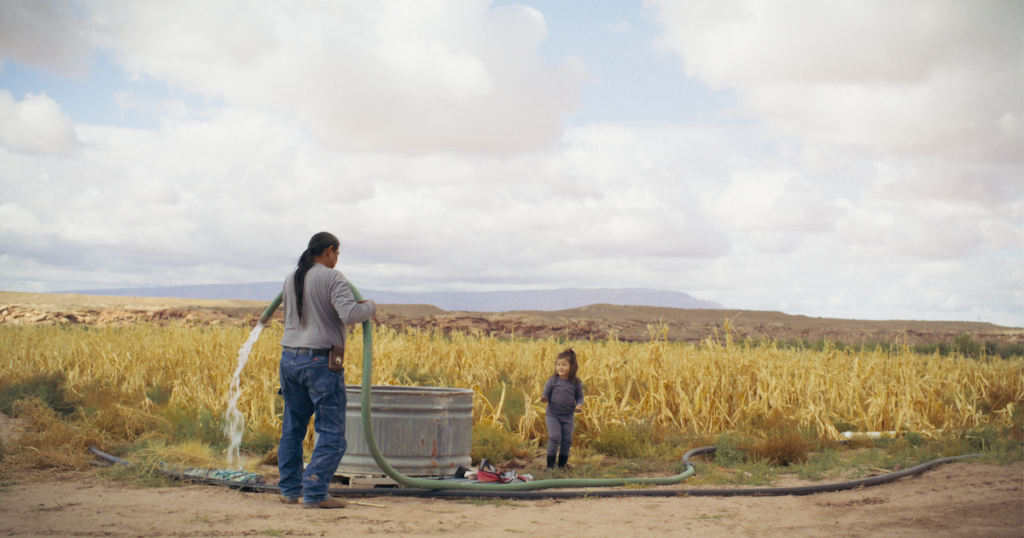
A still from the documentary “The River.”
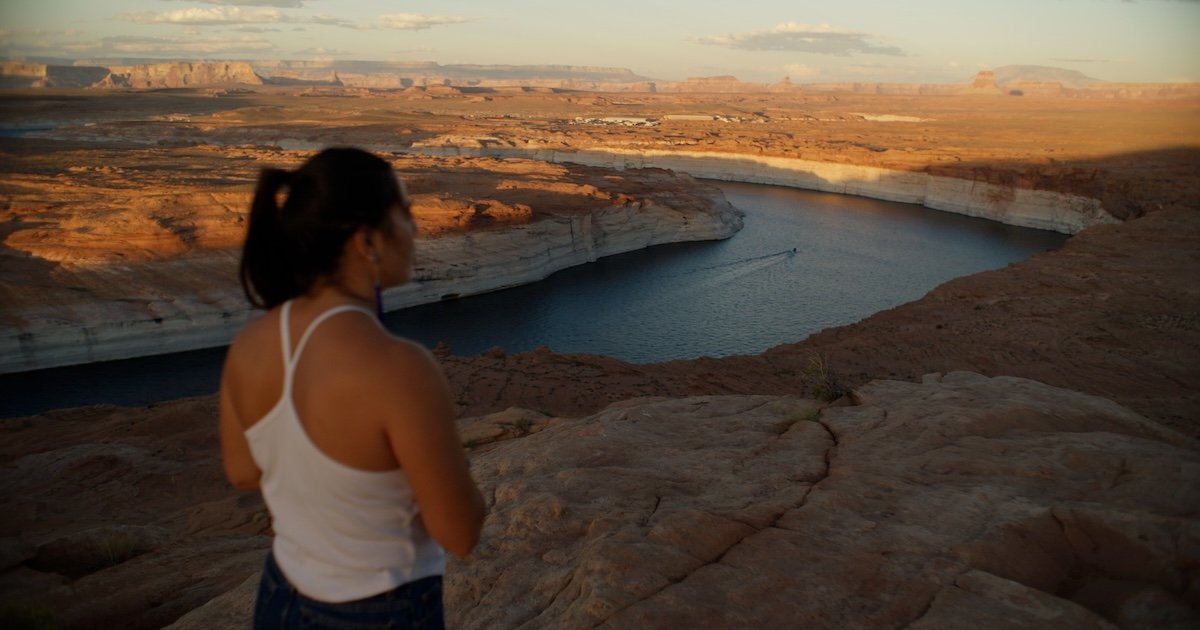
The opening sequence establishes Tasker’s ambitions. An aerial camera glides between towering rock formations before revealing the river winding through the landscape. As the camera descends toward the water, text explains how a century-old agreement divided the river among seven states based on water supplies that never actually existed.
Then a woman jumps into the river, splashing happily as an insect lands on her skin. The contrast is striking. While governments fight over how to divide the dwindling supply, she experiences the river as something alive and essential. It’s an evocative start to a documentary that continually shifts between the enormous scale of the crisis and the intimate relationships people have with the water at its center.
A river of competing interests
Tasker and editor Monique Zavistovski weave together stories that complicate easy judgments about who deserves the river’s increasingly scarce water. Wyoming ranchers worry about losing the land their families have worked for generations. California farmers argue that their water-intensive operations feed millions of Americans. In Utah, an elderly real estate developer surveys the booming community he helped build and wonders whether his great-grandchildren will have enough water to live there.
Other subjects are already confronting a future those communities fear. Nolan Stevens, a farmer on the Navajo Nation, must painstakingly haul water for his household and crops. Although the Navajo Nation has longstanding water rights, many residents lack the infrastructure to bring that water into their homes.
Meanwhile, Arizona pool-service business owner Chantel Dooley collects water from her parents’ home after losing access to municipal supplies. She spends her workdays maintaining swimming pools while struggling to secure running water for herself. The irony is almost too outrageous to believe.
Yet Tasker wisely resists turning these people into heroes and villains. Everyone has a justification for the water they consume, and that tension gives the film its dramatic momentum. Zavistovski’s skillful editing places these competing perspectives in conversation, revealing how one community’s survival can depend on decisions that threaten another’s.
The cinematography by Brandon Somerhalder, Kent Harvey and Brook Aitken is consistently spectacular, capturing everything from rushing currents to the hypnotic movement of irrigation water through green fields. Chyenne Klemme’s poetic reflections deepen that beauty with an Indigenous perspective on humanity’s relationship with nature.
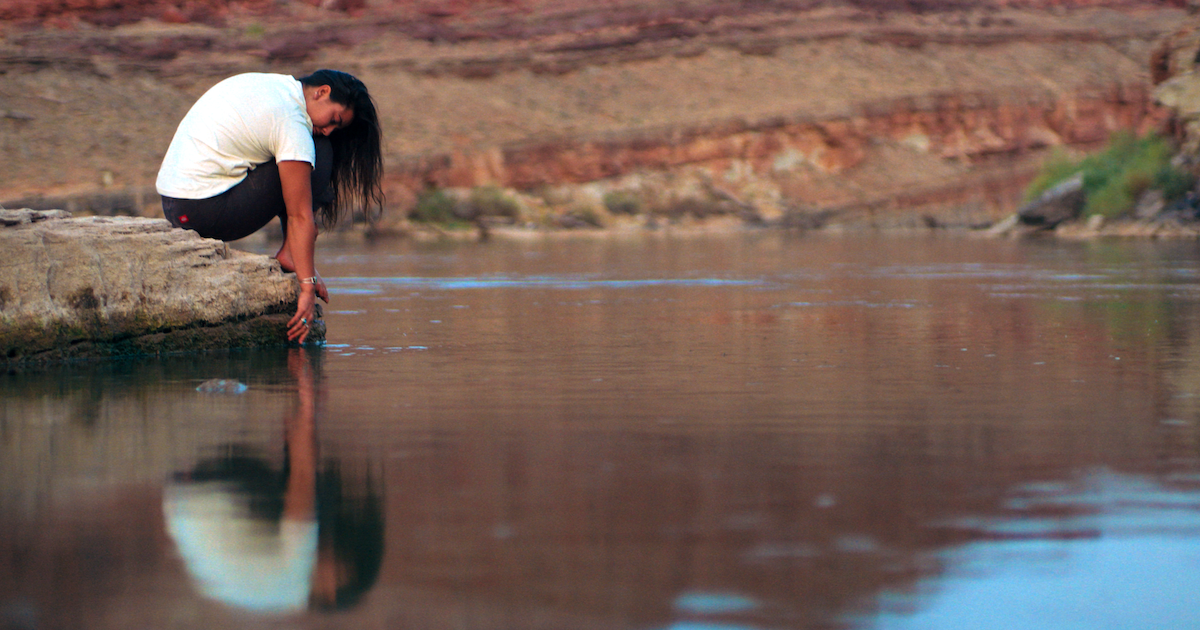
A still from the documentary film “The River.”
“We are a thirsty civilization,” Klemme observes. “We have ruled this river’s body for a century, and that’s where the story changes. For the river and for us.”
Occasionally, the documentary’s broad scope becomes a limitation. The constant movement between states and subjects leaves some fascinating individuals underexplored, while the negotiations themselves receive less scrutiny than their potentially devastating consequences warrant.
Nevertheless, “The River” succeeds by making water scarcity impossible to dismiss as somebody else’s problem. Watching Stevens and Dooley spend hours obtaining something most Americans access by turning a faucet, it’s difficult not to wonder how you’d manage if that convenience disappeared.
At 88 minutes, the documentary makes its case without drowning audiences in statistics or surrendering to environmental despair. Klemme’s closing observation, “If the river can change, so can we,” offers hope without pretending that the necessary changes will be easy.
After all, the crisis isn’t some distant possibility. It’s already upending lives across the American West, and the distinction between those who have reliable access to water and those who don’t is more precarious than we’d like to believe. “The River” makes that reality impossible to ignore.