‘The River’ explores the human side of water
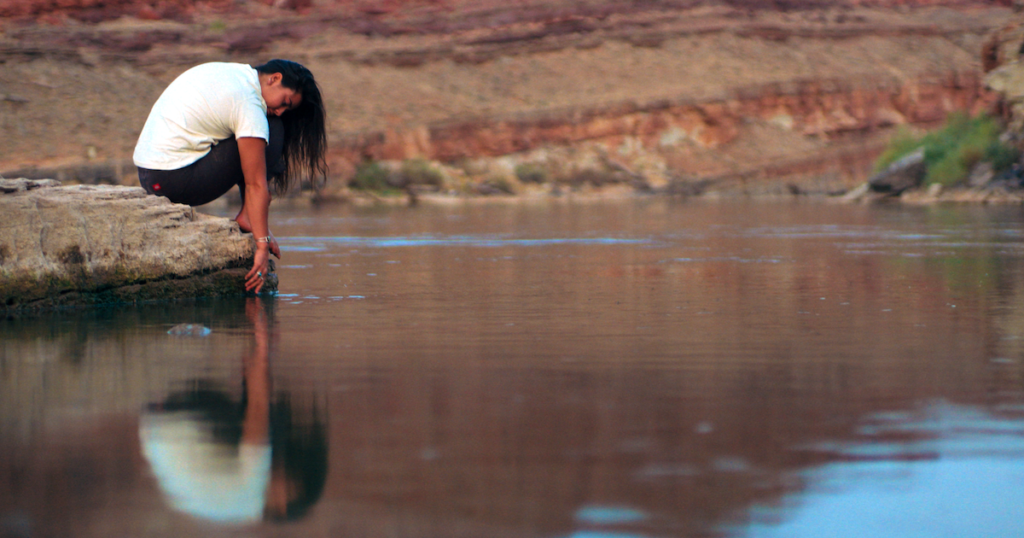
Director Mara Tasker discusses "The River," her documentary about the Colorado River crisis, ahead of its Denver Film Festival screenings.
Director Mara Tasker discusses ‘The River,’ her documentary about the Colorado River crisis, ahead of its Denver Film Festival screenings.
Four years ago, filmmaker Mara Gasbarro Tasker was working on an unrelated project in Alamosa, Colo., when a conversation with the local sheriff introduced her to a conflict she couldn’t shake.
Between takes, she asked what was happening in the community that wasn’t being discussed. His answer was two words: “water wars.”
The sheriff described a dispute over the Rio Grande River that had become so heated that a SWAT team was called in. Tasker was struck by the intensity of the conflict and began wondering what would happen as competition for the Colorado River’s dwindling water supply intensified.
“It just made me wonder what must water have meant to those individuals that they were willing to take up arms against each other,” Tasker said. “And then what’s going to happen with the Colorado River if it impacts this many millions and millions of people? How could we possibly come to any resolution in the negotiations?”
Those questions eventually became “The River,” an 88-minute documentary screening Oct. 24 and 28 during the 49th Denver Film Festival. The Colorado-produced film follows families and communities across the Southwest whose livelihoods, traditions and futures depend on a waterway increasingly threatened by climate change and human consumption.
Rather than relying primarily on politicians and scientists to explain the crisis, Tasker wanted to understand what was happening beneath the headlines.
“I think a lot of the coverage around the Colorado River is coming from, as you want it to, experts and academics and journalists,” she said. “But to move people with a film, I think we have to get beyond the facts and figures of the situation and try to get into the heart of it and get into the emotions that make it so sticky.”
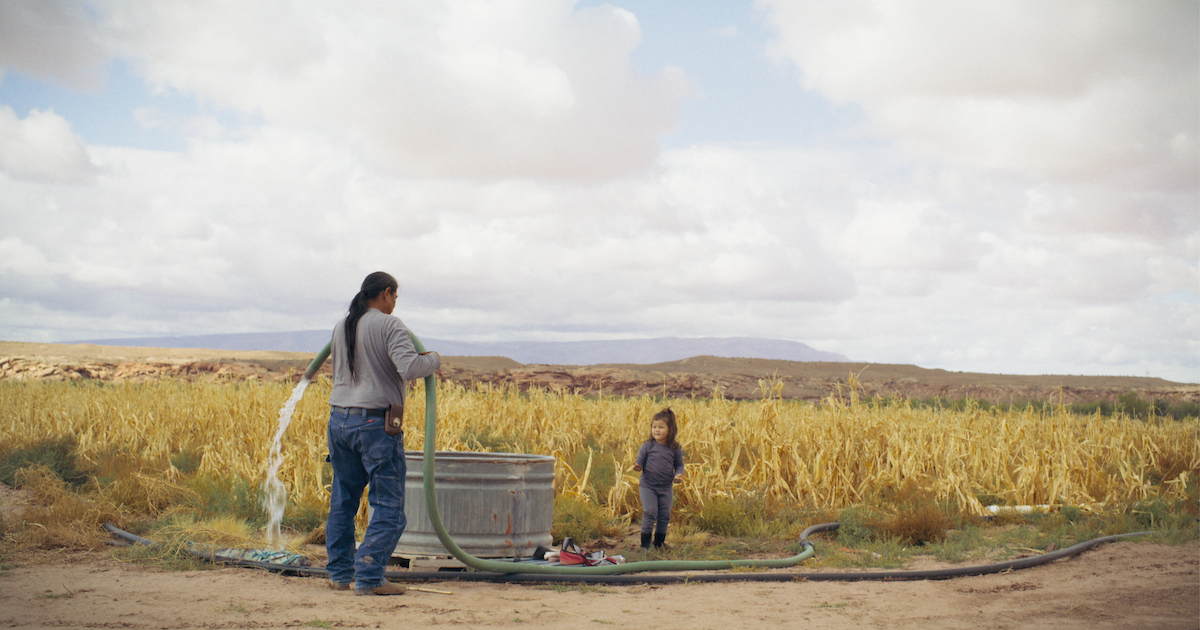
A still from Mara Gasbarro Tasker’s documentary “The River.”
Finding the people behind the crisis
Tasker and her team spent approximately 18 months researching the issue, conducting interviews and traveling throughout the region to identify potential subjects. Another year and a half went into filming, followed by roughly a year of editing.
“We have like eight hard drives that are filled with footage for this,” Tasker said.
One particularly difficult omission was Gama, an irrigation specialist working on an Imperial Valley farm in California. Tasker followed his exhausting daily commute from Mexico, where he lives with his family, to the agricultural fields where he helps manage every drop of irrigation water.
Although his story didn’t fit the documentary’s final structure, Tasker says it illustrated the often-overlooked human labor behind the region’s food supply.
“He leaves the farm at about 3 p.m., he gets home through rush hour traffic, sees his wife and child only for a moment, goes to bed, and he’s up at 1 in the morning so that he can commute back across the border before traffic hits,” Tasker said. “We spent some time with Gama, and the footage is beautiful, and he’s beautiful, but it just couldn’t fit into the story.”
The finished film instead weaves together multiple perspectives, allowing disagreements over water allocation, agricultural needs and environmental protection to emerge through personal experience.
Those differences became especially apparent when The River premiered at the Boulder International Film Festival in April. Nearly every participant appeared together for a post-screening discussion that Tasker describes as occasionally contentious, though grounded in “mutual respect for each other’s lives.”
“It was a total pleasure to be able to have this uncomfortable conversation, but having set the tone of, like, we’re all people here, and we all have a lot that we care about, and a lot, a lot that’s at stake,” she said.
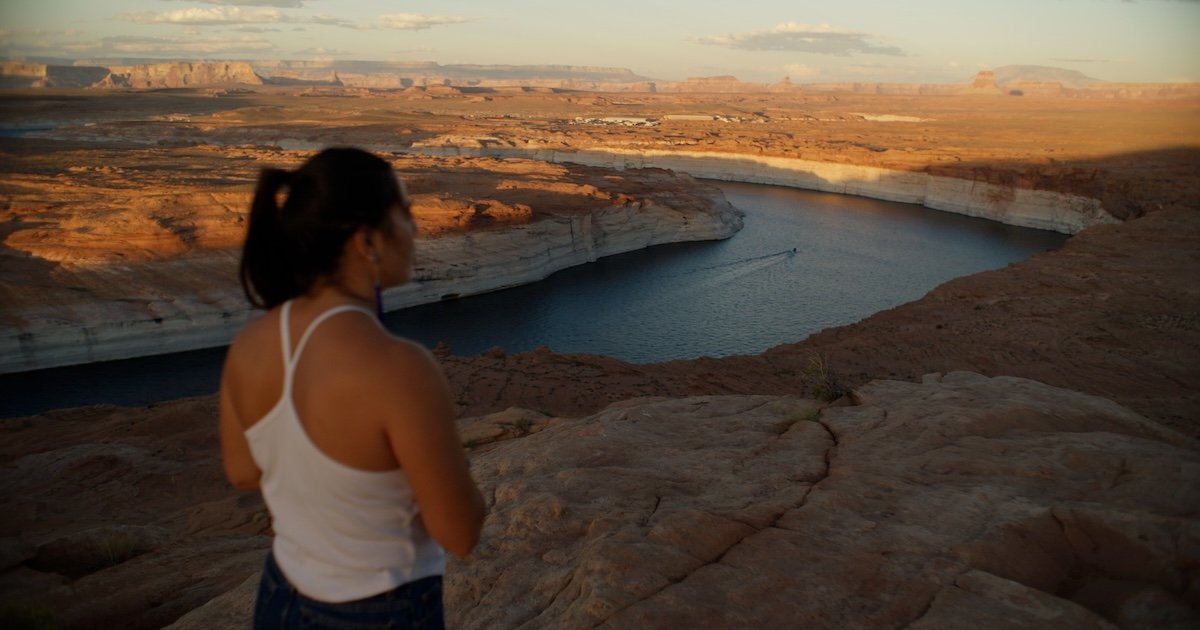
A still from the documentary “The River.”
Taking the conversation beyond the theater
Since its premiere, Tasker has taken the documentary to festivals, educational events and communities directly affected by the river’s decline, including a recent tour of five reservations.
The Denver Film Festival screenings are part of that broader outreach effort. Tasker is set to participate in the Oct. 27 panel, “Muddy Waters — Navigating the Colorado River’s Uncertain Future,” happening at Tattered Cover Colfax at 1 p.m.
The film will become available to stream on Kinema beginning Nov. 17, with wider distribution planned. Tasker hopes the documentary can serve as an introduction to a complicated crisis while encouraging audiences to recognize their own responsibility for the river’s future.
“I think if you work in the world of policy, you end up so engrossed in the big idea of that policy,” Tasker said. “I think it’s really important to remember what’s going on on the ground and the lived experiences of where that policy is working and not working.”
She recalls a water lawyer approaching her after a Boulder screening to explain how the film had changed his perspective. Accustomed to thinking about water rights and allocation, he found himself emotionally transported into the agricultural communities affected by those decisions.
“I think that’s the power and that’s the job of what artists can provide in these kinds of moments,” she said.