
‘La Bola Negra’ review: The most overrated film of 2026?
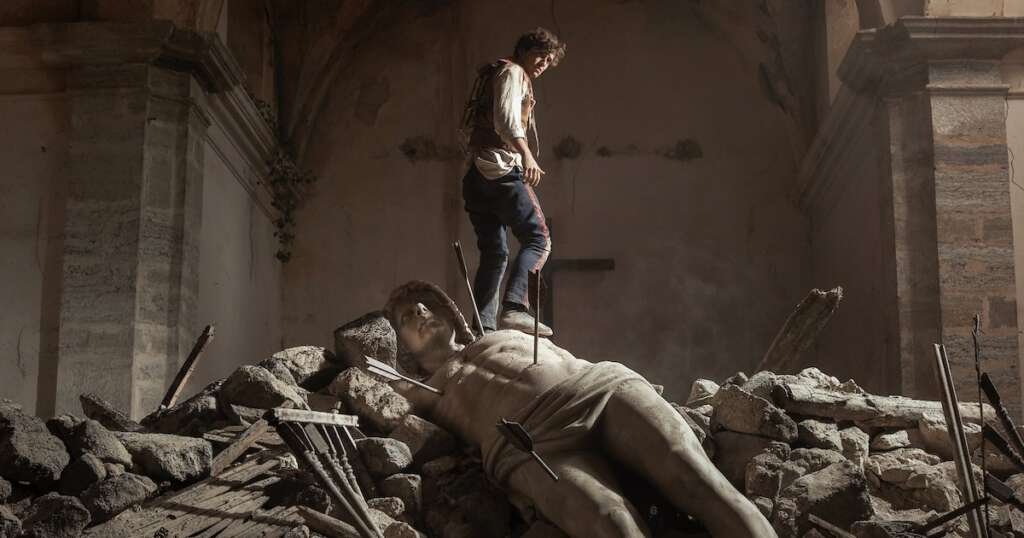
Cannes and Toronto loved "La Bola Negra." But this Oscar-buzzy queer epic is 160 minutes of beautifully photographed boredom.
In the opening scene of “La Bola Negra,” a Spanish village welcomes Mussolini’s forces with a brass band, expecting the Italian troops to be allies. Instead, fighter planes open fire on the crowd. Music gives way to screams as terrified villagers scramble for safety.
It’s a gripping sequence, brilliantly staged and photographed, and for a few minutes, I could understand why this film has been hailed as one of the year’s best.
Then the next two and a half hours happened.
Directors Javier Calvo and Javier Ambrossi shared the Best Director prize at Cannes, and their sprawling queer epic subsequently won the People’s Choice Award at Toronto, generating considerable Oscar buzz. Having endured its 160 minutes at the Denver Film Festival, I have one question: Why?
“La Bola Negra” is epic but rarely entertaining, ambitious but surprisingly short on insight, crowded with characters yet almost entirely devoid of characterization, and it’s easily the weakest film I’ve seen at this year’s festival.
The Spanish directing duo, known as Los Javis, and co-writer Alberto Conejero construct three interconnected narratives around Federico García Lorca’s unfinished play “La Bola Negra,” imagining how its rediscovery might illuminate generations of queer history.
In a story set in 1932 and drawn from Lorca’s unfinished play, Carlos (Milo Quifes) faces ostracism over his homosexuality. In 1937, Sebastián (Guitarricadelafuente), a young man conscripted into Franco’s Nationalist army, develops feelings for a Republican prisoner, Rafael (Miguel Bernardeau). And in 2017, Alberto (Carlos González), a failed playwright turned historian, investigates the past of a grandfather he never knew.
There’s no denying the film’s visual splendor. Cinematographer Gris Jordana delivers one exquisite composition after another, including a stunning low-angle tracking shot that follows Carlos into an exclusive casino. Yet these flourishes are consistently more interesting than anything happening within them.
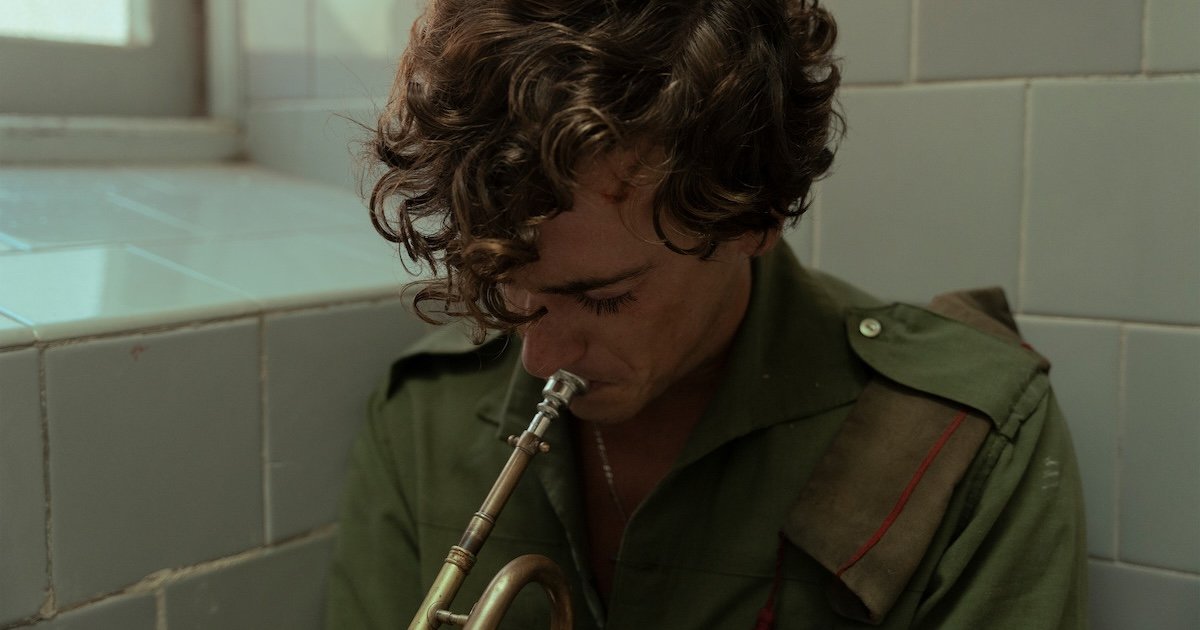
A still from “La Bola Negra.”
The central romance between Sebastián and Rafael should be devastating, but their relationship never develops enough to make its tragedy resonate. Alberto’s investigation is similarly inert. We’re meant to believe that uncovering his family’s history has transformed him, but the performance and screenplay never make that change convincing.
The frustrating editing compounds these problems. Rather than allowing the three timelines to reveal new dimensions of one another, the film frequently cuts between them as though someone were arbitrarily changing television channels. Alberto learns something in one scene, and the next simply dramatizes what we’ve already been told.
By the hour mark, its ideas about inherited shame, repression and recovering queer history are abundantly clear. Unfortunately, there’s another hour and 40 minutes to go. Things only grow more tedious when the screenplay abandons what little subtlety it possesses for painfully literal magical realism. The imagined contents of Lorca’s unfinished play are especially underwhelming, with characters reduced to mouthpieces for themes the filmmakers have already hammered home.
Penélope Cruz briefly injects some badly needed life into the proceedings as Nené, a charismatic cabaret performer whose affecting conversation about a trans friend and mischievous energy suggest a far more interesting film. Her brief scenes have a flamboyant humanity that’s sorely missing from the dreary, mopey angst dominating the rest of the film.
A story about generations of men denied the freedom to love should make us feel the enormity of what they’ve lost. Instead, Calvo and Ambrossi give us nearly three hours of beautifully photographed misery, confusing suffering with depth and repetition with profundity.
There’s an admirable impulse behind “La Bola Negra.” Stories of queer lives erased by violence and secrecy deserve to be excavated. Yet the film is so preoccupied with insisting upon their importance that it neglects to make its own characters interesting enough to care about. More queer stories deserve to be told. I just wish these filmmakers had told a more interesting one.