
Boulder opens its homes to Sundance. Can visitors pay the price?
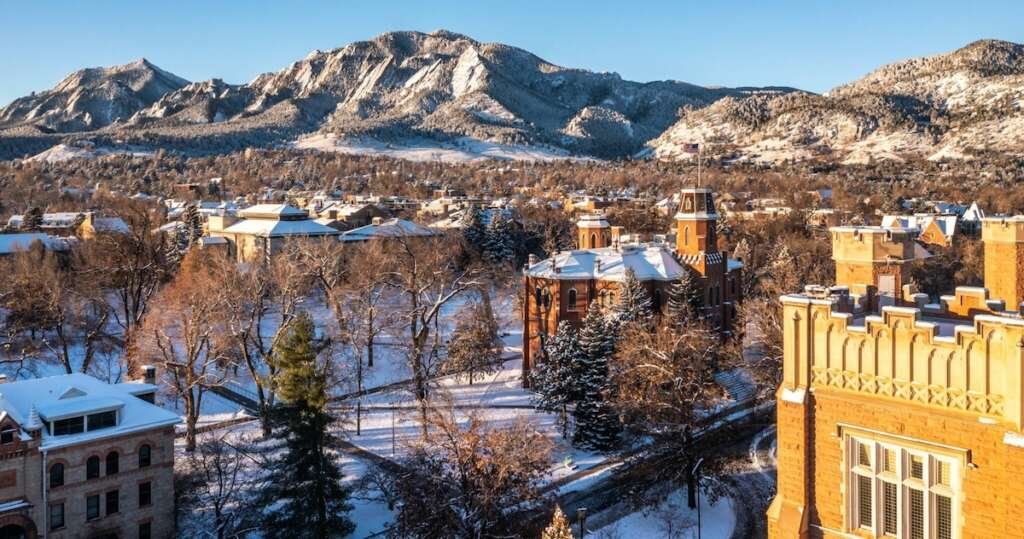
Boulder has surpassed its Sundance lodging goal, but soaring rental prices raise questions about what visitors will pay.
Boulder homeowners are opening their doors to the Sundance Film Festival in record numbers, with some hoping to collect tens of thousands of dollars from visitors descending on the city in January.
With fewer than 3,000 hotel rooms and an estimated 85,000 to 100,000 festival attendees expected over 11 days, Boulder faced a significant lodging challenge when it secured the internationally renowned film festival. Its solution was to temporarily loosen short-term rental restrictions, allowing more residents to offer their homes to festivalgoers.
The response has exceeded expectations. As of Oct. 22, more than 1,800 festival lodging applications had been submitted, surpassing the city’s initial goal of 1,500. That figure represents applications rather than necessarily approved licenses or available rentals.
The expanded inventory could help Boulder accommodate visitors when Sundance makes its Colorado debut Jan. 21-31, 2027. However, some homeowners are advertising properties at extraordinary prices, raising questions about whether visitors will pay.
“We know that folks are asking some high prices, and that’s the value decision for them,” said Cris Jones, the city’s director of strategic partnerships. “But we are hoping that a majority of the folks who are signing up for this are going to price appropriately to the market.”
Sundance lodging in Boulder
Boulder’s Festival Lodging Rental License allows eligible homeowners, property owners and tenants with permission to rent out residences that otherwise might not qualify for short-term rentals. The program covers Jan. 11 through Feb. 9, 2027, with rentals limited to 29 days annually.
Jones said the city recognized its lodging limitations during the bidding process but believed its transportation infrastructure and concentration of screening venues would help compensate.
“We’ve got strengths in a lot of areas when it comes to transportation, and our venues are incredible,” Jones said. “We know that Boulder is challenging no matter what time of year it is.”
During an August interview, Jones estimated that approximately 1,600 short-term rental licenses had been issued across the city’s existing and new programs, although he did not have an exact breakdown. Applications have continued to increase since then. Jones said officials were initially hoping to add 1,500 new rentals, with an average of three bedrooms per home.
“So that’s a number of new offerings,” he said. “And so by January, we’ll have even more than our goal.”
The additional accommodations could also help Boulder capture more of Sundance’s economic benefits. The city and its partners committed approximately $34 million in incentives over 10 years to attract the festival, with officials anticipating increased restaurant spending, retail activity and sales tax revenue during a traditionally quiet month.
“It’s a great opportunity to get a lot of folks in town, and they’re going to spend money, they’re going to go out to eat, they’re going to fill restaurants and stores, and just bring life to Boulder,” Jones said.
How much is a Sundance stay worth?
Although Boulder has attracted prospective hosts, the prices some are seeking tell a more complicated story.
CBS Colorado reported in June that certain properties were advertised for as much as $60,000 for a 10-night stay. Business Insider subsequently documented listings earlier this month exceeding $40,000, including a six-bedroom property advertised for more than $60,000. Those prices far exceed Visit Boulder’s suggested rates of $250 to $300 per night for a one-bedroom apartment and $1,100 to $1,400 for a four-bedroom house.
Jones suggested that some homeowners may only be willing to leave town if they can secure an unusually high payout.
“Maybe they want to stay during the festival, but they have their price that they’re willing to ask,” he said. “If you pay me that much, then I will stay somewhere else and forego the festival this year or stay at a friend’s house in another community and commute in.”
However, advertised prices don’t necessarily reflect what visitors are willing to pay. Jones anticipated that increasing the number of rentals would eventually push prices down.
“The more licenses that come online, the laws of supply and demand, then the prices will come down,” he said.
Whether that prediction holds true remains uncertain. The number of applications doesn’t establish how many properties have secured reservations, and some homeowners may need to lower their asking prices to attract visitors.
A review of Visit Boulder’s official lodging website on Nov. 13 found that hotel availability remains limited during Sundance’s opening weekend, with significantly more options advertised for the second week and closing weekend. The site also indicates that hundreds of additional homes are still moving through the festival rental permitting process, suggesting the market could continue to expand before January.
Looking beyond Boulder
Even with additional rentals, city officials anticipate that many Sundance attendees will stay in surrounding communities and commute into Boulder. Jones noted that approximately two-thirds of Sundance participants in Utah were local residents, meaning not everyone attending the festival will require overnight accommodations.
“And so while we certainly are going to fill our hotel rooms in Boulder, we know we’re also going to help fill hotel rooms and lodging opportunities outside of Boulder as well,” he said.
Transportation will be essential to that strategy. Visitors staying in Denver, Longmont and other nearby communities are being encouraged to use regional buses, while local routes will provide free, expanded service connecting screening venues.
“Please use the RTD Park and Ride system, which is an affordable way to park for the day,” Jones said. “Park your vehicle once. Use the Flatiron Flyer. Use the Bolt service from Longmont to get into Boulder.”
That approach could help preserve the compact, walkable festival experience Boulder promised, even for attendees staying miles away. Jones said transportation had initially been one of his biggest concerns, although he believes the city has made substantial progress.
“The things that were keeping me up were transportation,” Jones said. “And I think that we’ve really got things dialed in there. We have a lot to figure out. I think it’s probably the little details at this point.”
Those details include how the city’s expanded lodging market will function once thousands of visitors arrive. Jones acknowledged that officials will inevitably encounter challenges they cannot anticipate, requiring adjustments as the festival settles into its new home.
“Some of those things we’re going to learn about in real time, and we’re going to need to be responsive and reactive,” he said.
With a 10-year agreement bringing Sundance to Boulder, Jones sees the inaugural festival as the beginning of a longer learning process.
“We’ll learn a ton in year one and year two; we’ll make some adjustments and corrections,” he said. “And then year three, I think, is going to be golden.”