‘Possible Love’ review: Great filmmaking, miserable company
Lee Chang-dong's 'Possible Love' is beautifully acted and full of ideas, but its 164-minute story is a sorrowful slog.
It’s quite a year for movies suspicious of documentary filmmaking.
Nathan Fielder and Lance Oppenheim’s “You Can See Everything,” currently in theaters, questions whether a documentarian can ever be objective. Lee Chang-dong’s “Possible Love,” which screened opening night at the Denver Film Festival, joins that conversation with another uncomfortable question: Who gets to point that camera at someone else’s suffering?
The answer is complicated, beautifully photographed and, at 164 minutes, occasionally exhausting.
Lee’s first film since 2018’s “Burning” raises provocative questions about exploitation and the stories we tell about ourselves. The film opens with the commandment “Thou shalt not covet,” which hangs over two couples on opposite sides of a class divide.
Ho-seok (Sul Kyung-gu) has been laid off from SP Heavy Industries following a bitter strike. He’s withdrawn into himself, leaving his wife, Mi-ok (Jeon Do-yeon), struggling to maintain some semblance of normalcy.
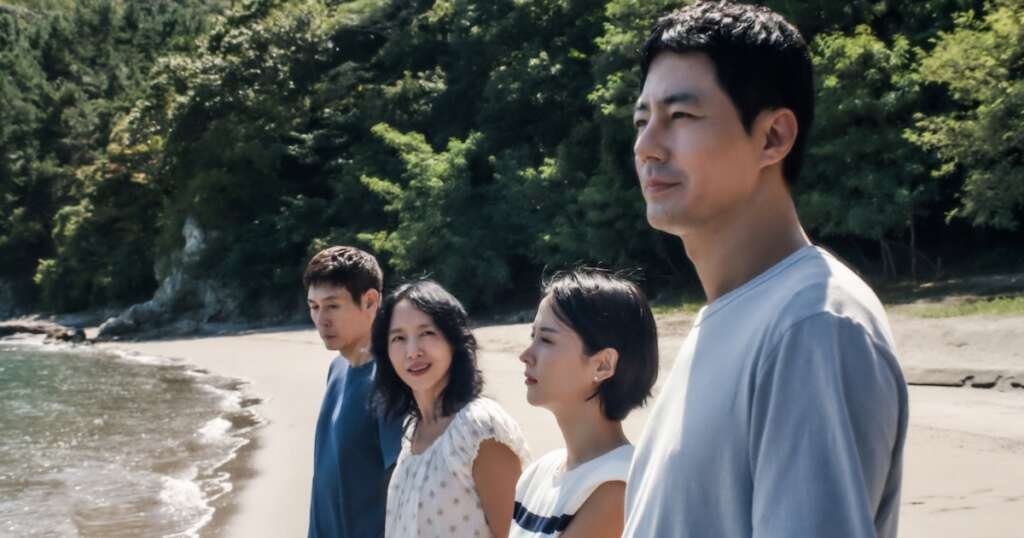
Then comes Ye-ji (Cho Yeo-jeong), a wealthy documentary filmmaker who wants to tell the workers’ stories. Her rich husband, Sang-woo (Zo In-sung), eventually enters the picture, and the two couples become increasingly entangled.
Lee, who co-wrote the screenplay with Oh Jung-mi, is particularly sharp about the hypocrisy of privileged people documenting working-class struggles. When Ye-ji pitches her project, she’s asked why she wants to make this film in the first place. It’s a question that Ye-ji is never able to offer a satisfactory answer to.
At one point, Mi-ok looks up the price of Ye-ji’s designer handbag. Later, she suggests her new friend might avoid wearing such expensive clothes when interviewing people who have lost their jobs. That moment literalizes the central tension hanging over her documentary: while Ye-ji can put down her camera and return to comfort, her subjects cannot walk away from their circumstances.
There’s also something deeply uncomfortable about watching this wealthy couple introduce their struggling new friends to possibilities they’ll never realistically afford. Their generosity comes with an unmistakable imbalance of power. Even when they’re trying to help, they’re still calling the shots.
Jeon is exceptional as Mi-ok, whose wedding ring keeps slipping off her finger, an admittedly heavy-handed metaphor for her deteriorating marriage. In an early scene, she breaks down crying while searching for the ring, only to quickly regain her composure when others approach.
Though “Possible Love” is an ensemble film, Jeon delivers its most textured performance and deserves serious consideration in the Best Actress race.
Unfortunately, the film doesn’t always reward the patience it demands. Cinematographer Kim Ji-yong fills the screen with lovely, carefully composed images, particularly during a visit to Sang-woo’s seaside home. However, there’s only so much beautiful cinematography can do to make up for the fact that this movie is an absolute bummer.
Lee deliberately traps his characters in emotional paralysis, but extended stretches of silence and strained conversations grow repetitive. At times, the characters seem more like vehicles for the film’s ideas than people capable of surprising us.
Still, a late documentary interview in which Ho-seok finally cracks delivers the emotional payoff the film has spent nearly three hours withholding. Sul’s performance is gripping, and suddenly much of that accumulated misery has somewhere to go.
A Venice Grand Jury Prize winner and South Korea’s Oscar submission, “Possible Love” deserves the attention it’s receiving. There’s a fascinating film here about who gets to tell another person’s story and what happens when compassion becomes another form of control.
I’m glad I stuck with it. I’m just not sure I’d want to sit through it again.