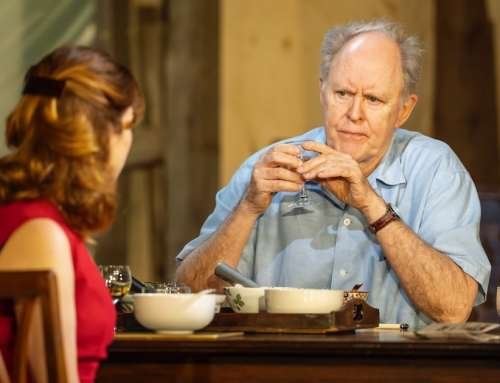
‘Elsinore’ review: Andrew Scott gets lost in a TikTok-ified tragedy

"Elsinore" is a frustratingly choppy awards-season biopic that undercuts its own powerful story.
At one point in “Elsinore,” Ian Charleson (Andrew Scott) complains that film belongs to directors and editors, who get to decide what we see, while theater belongs to actors. After watching Simon Stone’s frustratingly choppy biopic, I couldn’t agree more. This is a film about the power of live performance that seems determined to cut away every time something interesting begins to happen.
The film opens in 1989 with Daniel Day-Lewis abruptly abandoning a performance of “Hamlet” at London’s National Theatre. Stone actually gives this sequence room to play, letting the realization of who has walked offstage ripple through the company. Charleson, a gifted gay actor struggling to find satisfying work, is suddenly offered the role of a lifetime while battling AIDS.
There’s a fascinating story in that collision of ambition and mortality. Charleson wants his Hamlet to be judged on its own merits, rather than filtered through pity for a dying man. His reluctance to disclose his sexuality or diagnosis brings him into conflict with artist Derek Jarman (David Dawson), who believes visibility matters during a crisis. Charleson’s declaration that people can find out he was gay and had AIDS when he’s dead is heartbreaking.
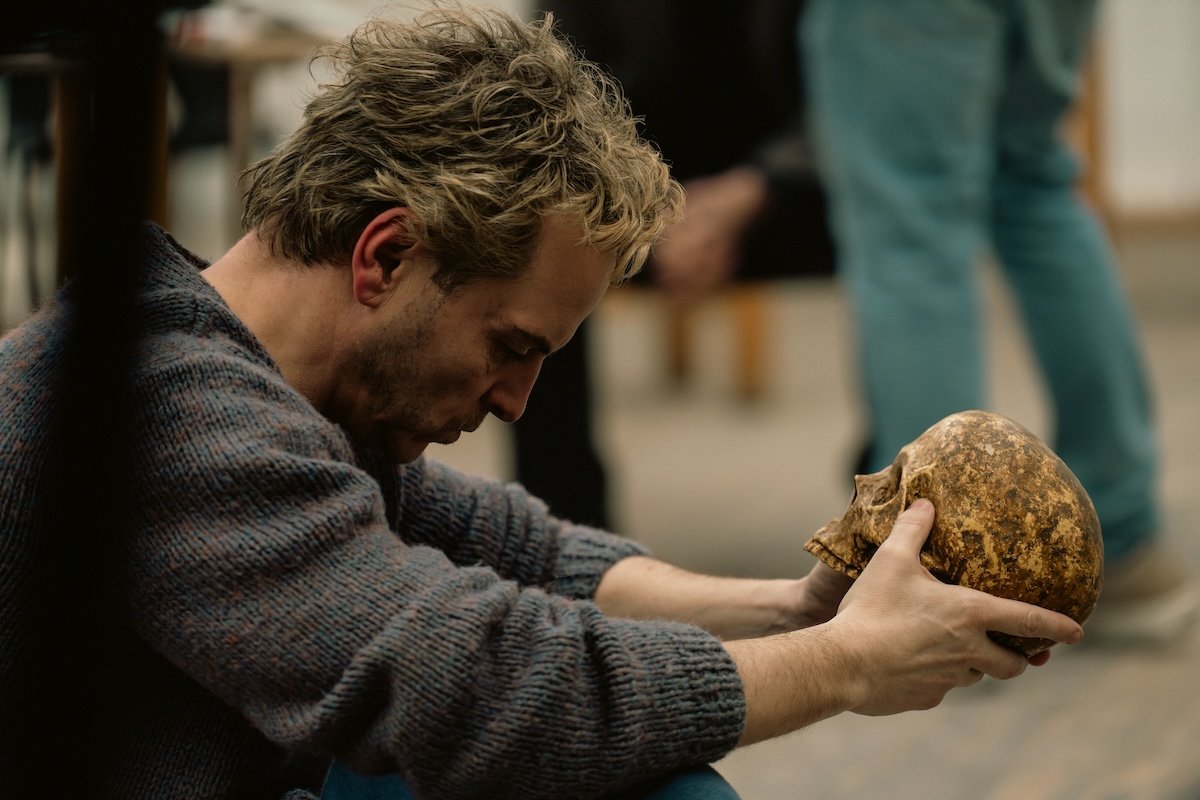
Andrew Scott stars as Ian Charleson in “Elsinore,” a Focus Features release. Credit: Anthony Dickenson / © 2026 FOCUS FEATURES LLC
Scott is tremendous whenever Stone leaves him alone long enough to act. In an early scene, Charleson stands naked before a mirror, diligently checking his body for suspicious spots. In another, a doctor washes his hands twice during a consultation, so fearful of AIDS that he can’t conceal his discomfort. Charleson notices and calls him out. Scott is equally compelling in the quieter moments, capturing Charleson’s grief as he loses friends to AIDS while confronting the terrifying reality of his own approaching death.
The film also finds real tension between Charleson and Dr. Margaret Johnson (Olivia Colman), who is desperately trying to keep him alive. He insists that life is only worth living if he can continue doing what makes him feel alive, even if performing Hamlet takes a terrible toll on his body. Their competing ideas of what it means to live are fascinating, and Scott and Colman make these exchanges extraordinarily moving.
If only Stone and editor Valerio Bonelli trusted those moments. The longer “Elsinore” goes, the more it becomes a TikTok-ified AIDS drama, racing through scenes and characters as though we’re watching a highlight reel of Ian’s final days. One moment we’re in rehearsal, then a hospital, then an out-of-context scene from “Hamlet,” then a fight with someone we barely know — rinse and repeat.
Even the film’s more inspired ideas are given frustratingly little room to breathe. At one point, patients in the AIDS ward perform to Ethel Merman’s gloriously campy disco rendition of “There’s No Business Like Show Business” from her 1979 album. It’s a fascinating glimpse of people finding joy and community while confronting death, and Colman’s character witnesses the spectacle. Then, just as the moment begins to register, we’re whisked away to the next thing.

Olivia Colman stars as Margaret Johnson in “Elsinore,” a Focus Features release. Credit: Anthony Dickenson / Focus Features/STUDIOCANAL © 2026 All Rights Reserved.
The final stretch intercuts multiple performances of “Hamlet” into an increasingly frantic montage, dropping famous speeches and images into the film with little context. Scott gets to contemplate Yorick’s skull and grapple with Shakespeare’s meditations on mortality, but these moments feel strangely hokey when reduced to a few seconds of theatrical greatest hits. Rather than allowing Charleson’s interpretation of the material to reveal something about his relationship with death, Stone seems content to let the familiar words do the emotional heavy lifting.
I understand the intention. Charleson’s time is running out, and the fragmented editing arguably mirrors the disorienting experience of trying to squeeze a lifetime of living into the months he has left. Yet I wish Stone would recognize the importance of occasionally slowing down. Without moments of stillness, the relentless movement becomes exhausting rather than emotionally overwhelming. We need time to understand what these experiences mean to Charleson and the people around him before they’re swept away.
That’s what makes “Elsinore” so disappointing. There’s an incredibly powerful story here, anchored by a terrific central performance. Charleson fought to be remembered for what he accomplished onstage, and Scott gives Stone every opportunity to show us why. Watching the film hurry past those opportunities, I kept wishing its filmmakers would do the one thing Charleson himself fought for: Give the actor the stage.